01
The kit
What to carry, and why each thing earns its place in the trunk.
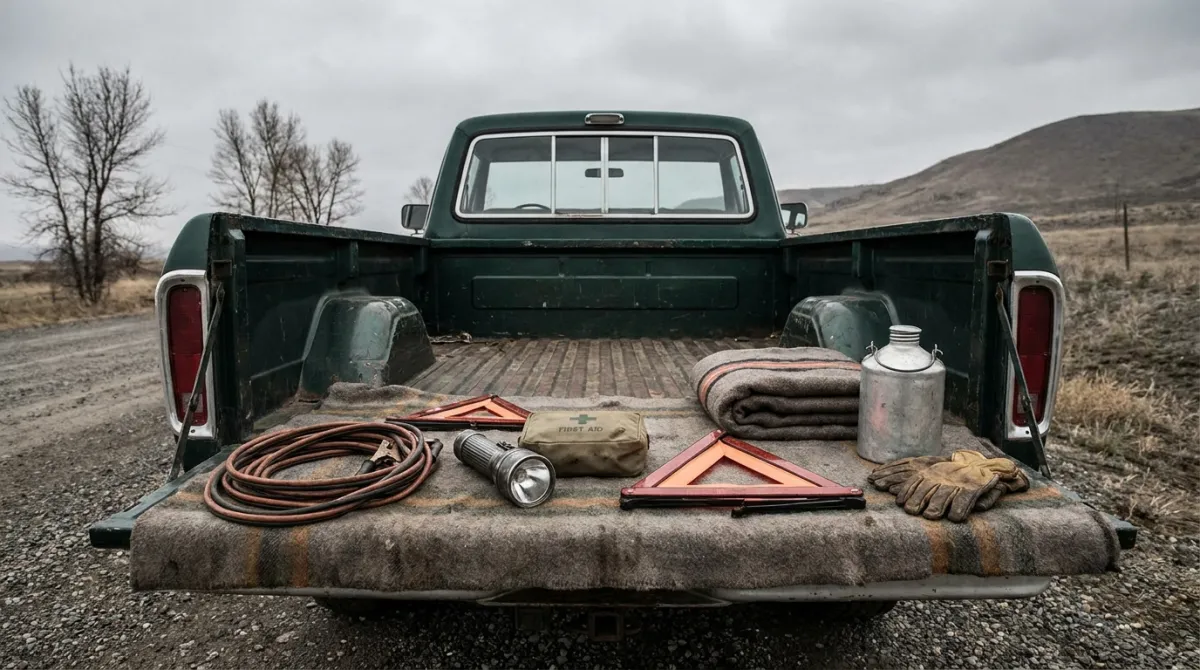
Most roadside trouble is small: a dead battery, a flat tire, a long wait. A kit that fits in one bag turns each of them from an emergency into an inconvenience. Build it once, check it twice a year.
Every car, all year
- Jumper cables or a charged jump pack
- A working flashlight and spare batteries
- Three reflective triangles or LED flares
- A basic first aid kit
- A tire pressure gauge and a 12-volt inflator
- Work gloves and a rain poncho
- A phone charging cable and a power bank
- Two liters of water and some food that keeps
- A paper map of your region
- Pen, paper, and your insurance card
Add for winter
- A blanket or sleeping bag for each seat you fill
- An ice scraper and a small folding shovel
- A bag of sand or cat litter for traction
- Hat, gloves and dry socks
The spare
Find out today whether your car has a spare tire, a compact spare or only a sealant kit. Many newer cars have no spare at all. A compact spare is good for about 50 miles at no more than 50 mph, and it loses pressure sitting in the trunk: check it when you check the others.
General safety information. In an emergency call 911 and follow the instructions of emergency crews.